


A legal ceremony is the binding marriage; a symbolic one is a ceremony without legal force, held anywhere you like. Italy and Greece allow legal weddings for visiting couples who do the paperwork. Spain and France tie civil marriage to residence, so most couples marry legally at home and hold the symbolic ceremony abroad.
The wedding you picture and the wedding the law recognises do not have to be the same event. Once you see that, the paperwork stops steering the plan. Choosing between a symbolic and a legal ceremony abroad is mostly a question of how much bureaucracy you want, and which country you are marrying in.
What is a symbolic ceremony?
A symbolic ceremony carries no legal weight. That is exactly why it is so flexible: it can take place on a clifftop, in an olive grove or on a beach, at any hour, led by a celebrant or a friend, with vows you have written yourselves. A legal (civil) ceremony is the binding one, held by a registrar, mayor or authorised official, and recognised by law.
Many couples mix the two. They sign the legal papers at home, then hold the ceremony that matters where they actually want it. Both are real weddings. Only one of them involves forms.
Why Spain and France make legal weddings hard
In Spain, the marriage file is opened with the civil registry or a notary where one of you is domiciled. For a couple who live elsewhere, that rules out a civil wedding. In practice Ibiza and Mallorca run almost entirely on symbolic ceremonies, with the legal marriage done at home. It is not a workaround so much as the standard.
France is built around a link to the commune. The mairie can only marry you if one of you, or one of your parents, is domiciled there or has lived there continuously for at least a month by the time the banns are published, and the banns then run for 10 days. For a weekend in Provence, that rarely works, so couples marry symbolically at the château and legally at home.

Why Italy and Greece are possible
Italy allows a binding civil marriage for foreigners. You gather documents at home, have them apostilled and officially translated, and obtain a nulla osta (a declaration that nothing prevents your marriage) through your consulate in Italy. You then marry at the comune or an approved venue. Allow several months for the paperwork.
Greece opens civil marriage to foreign couples too. You need full birth certificates translated into Greek, a certificate of no impediment and a municipal licence. A marriage announcement usually has to be published locally beforehand, non-EU partners need proof of lawful stay or a visa, and requirements vary by municipality. After the ceremony, the marriage must be declared to the local registry within 40 days. Build that into your departure plans.
| Country | Legal ceremony possible for non-residents? | Key requirement | Typical approach |
|---|---|---|---|
| Italy | Yes, with paperwork | Nulla osta, apostilled and translated documents | Civil in Italy, or legal at home |
| Greece | Yes, with paperwork | Translated, apostilled documents; register within 40 days | Civil in Greece, or legal at home |
| Spain | Effectively no | Marriage file opened where one partner is domiciled | Legal at home, symbolic in Spain |
| France | Rarely practical | One partner domiciled in the commune, or a month of continuous residence before the banns | Legal at home, symbolic in France |
| United Kingdom | Yes | England and Wales: 7 days of local residence, then a 28-day wait. Scotland has no residency rule | Civil in the UK, or legal at home |
| Australia | Yes | Notice of Intended Marriage lodged with a celebrant at least one month before | Civil in Australia |
What most couples do
The common route is the same almost everywhere: a quiet legal ceremony at your home registry office, then the symbolic ceremony and celebration abroad. It removes the translations, the apostilles and the residence rules in one decision, and no guest can tell the difference on the day.
When is a legal ceremony abroad worth it?
If having the legal act happen in Italy or Greece matters to you, and you can start early, a civil wedding is genuinely possible. It suits couples who like the idea of a single day that is both the party and the paperwork, and who have the lead time. If you want the exact clifftop with the least admin, choose symbolic.
Whichever you choose, settle the legal route early. It is one of the first things to decide after the date, because documents need time to be apostilled and translated.
Where each route works
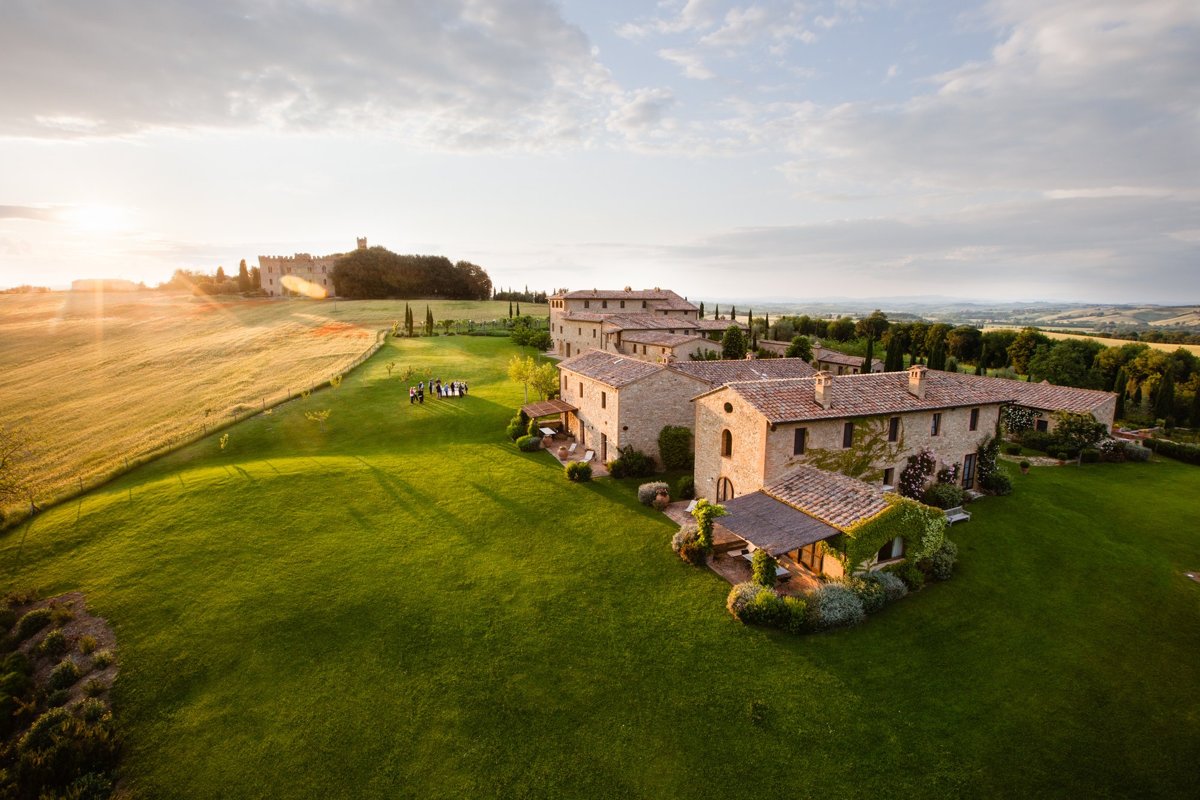
These venues suit a symbolic ceremony, with the legal marriage done at home: an Ibiza agroturismo and a Mallorcan sea-view hotel in Spain, a Tuscan borgo, a Santorini caldera hotel and a Provence bastide.
Venues for a ceremony abroad
Ibiza, Mallorca, Tuscany, Santorini and Provence.
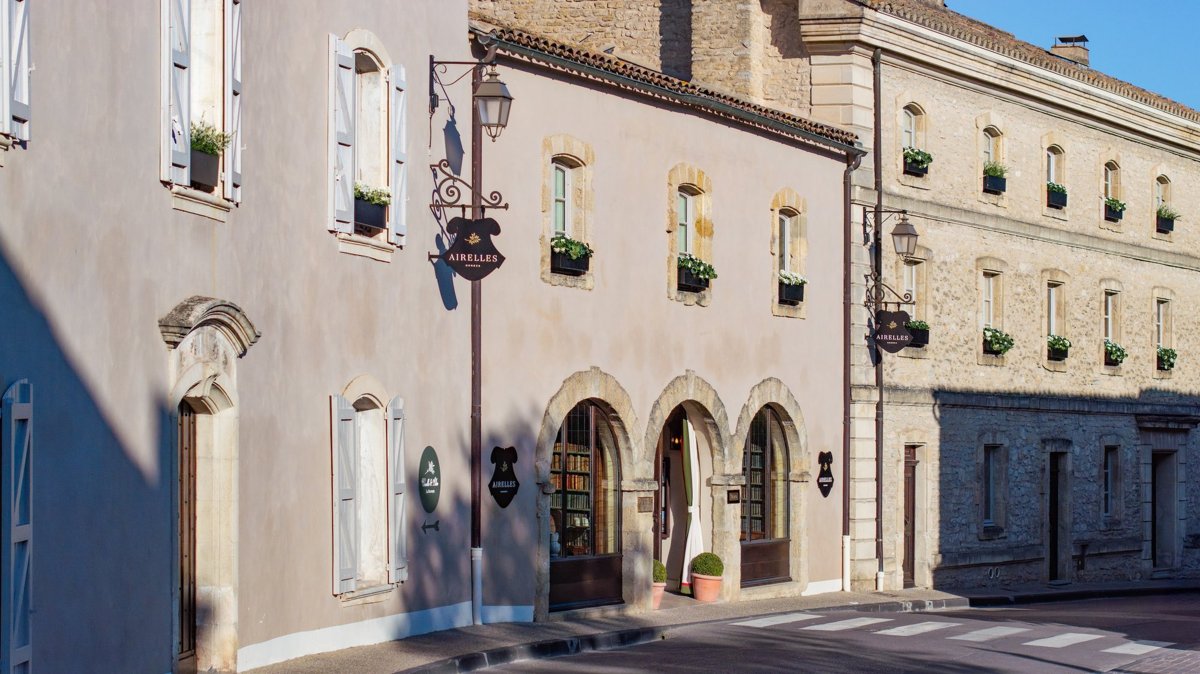
Airelles Gordes, La Bastide
La Bastide de Gordes is a 16th-century Provençal palace hotel inside the ramparts of Gordes, above the Luberon valley. Weddings can take over its terraces, gardens and pools, and guests stay in 34 rooms and 6 suites.
- Up to 180 guests
- 40 rooms
For the country detail, read our guides to marrying legally in Spain, Italy, Greece and France, or the overview in The Legal Bit. Then browse the Ibiza, Mallorca and Tuscany pages for venues that suit the ceremony you have in mind. When you enquire, tell the venue early whether the ceremony will be symbolic or legal.
Quick answers
What is the difference between a symbolic and a legal wedding abroad?
A legal wedding is the binding civil marriage, recognised by law. A symbolic wedding has no legal force, so it can happen anywhere, at any hour, with vows you write yourselves. Most destination couples marry legally at home and hold the symbolic ceremony abroad.
Can you legally get married in Spain if you do not live there?
Rarely. The marriage file is opened with the civil registry or notary where one of you is domiciled, so at least one partner needs to live in Spain. That is why Ibiza and Mallorca weddings are almost always symbolic.
Can foreigners legally marry in Italy or Greece?
Yes, with paperwork. Italy asks for a nulla osta from your own country plus apostilled, translated documents. Greece asks for translated, apostilled documents lodged with the town hall, and the marriage must be declared to the local registry within 40 days.
Do guests know whether the ceremony is symbolic?
Not unless you tell them. A celebrant can script vows, readings and a ring exchange so the ceremony feels entirely real. The legal signing happens quietly at your home registry office, before or after the trip.