



Italy lets foreigners marry legally. A civil ceremony in the town hall or a venue the comune has designated for civil weddings is achievable: you present a nulla osta from your own country’s authorities (or, for many EU citizens, a multilingual certificate of capacity to marry) to the local town hall. Many couples instead hold a symbolic ceremony anywhere they like and complete the legal marriage at home.
Italy is one of the more foreigner-friendly countries in the Mediterranean to marry in legally, which is part of why it is so popular. You have a genuine choice between a legally binding civil ceremony on Italian soil and a symbolic ceremony with the legal marriage done at home. Both are completely valid weddings; the right one depends on how much paperwork you want and how attached you are to a specific spot.
Civil vs symbolic: which do you need?
A civil ceremony is legally binding in Italy and can take place in a town hall or in a villa, hotel or garden the comune has formally designated as a civil-wedding venue; it cannot be any spot a venue offers. A symbolic ceremony has no legal force but total freedom of place, words and timing; you sign the legal papers at home before or after. If you want the exact clifftop or olive grove and the least bureaucracy, choose symbolic. If having the legal act happen in Italy matters to you, choose civil and build in lead time.
| Civil (legal in Italy) | Symbolic (legal at home) | |
|---|---|---|
| Legally binding | Yes | No (you marry at home) |
| Where | Town hall / comune-designated venue | Anywhere |
| Paperwork | More: nulla osta, translations | Minimal in Italy |
| Lead time | Set by how fast your documents arrive | Driven by your home country |
| Best for | A legal Italian wedding | Total freedom of place |
The documents you will need
For a civil marriage, expect to provide valid passports, birth certificates, a declaration of no impediment (the nulla osta, issued by your own country’s authorities, usually through its embassy or consulate in Italy), and any divorce or death certificates where relevant. Citizens of countries in the 1980 Munich Convention (including the Netherlands, Germany, France and Spain) give a multilingual certificate of capacity to marry instead of a nulla osta. Other nationals present a nulla osta, which the Prefettura legalises unless your country is exempt (the UK and Ireland are). Italy does not ask for an apostille on it, and a partner who does not speak Italian needs an interpreter at the ceremony. The comune’s civil registry office (ufficio di stato civile) sets the exact list, which varies slightly by town and nationality.
Where it works beautifully
Italy’s range is unmatched, from Tuscan borghi and Amalfi clifftop villas to Roman palazzi and Sicilian estates. A few that show the spread:
Marry across Italy
A Tuscan borgo, a hilltop villa in Ravello, a Roman palazzo and a Sicilian estate near Noto.

Borgo Finocchieto
Borgo Finocchieto is a restored medieval village of five villas around a central piazza, in the province of Siena near Montalcino and Buonconvento.
- Up to 250 guests
- 22 rooms
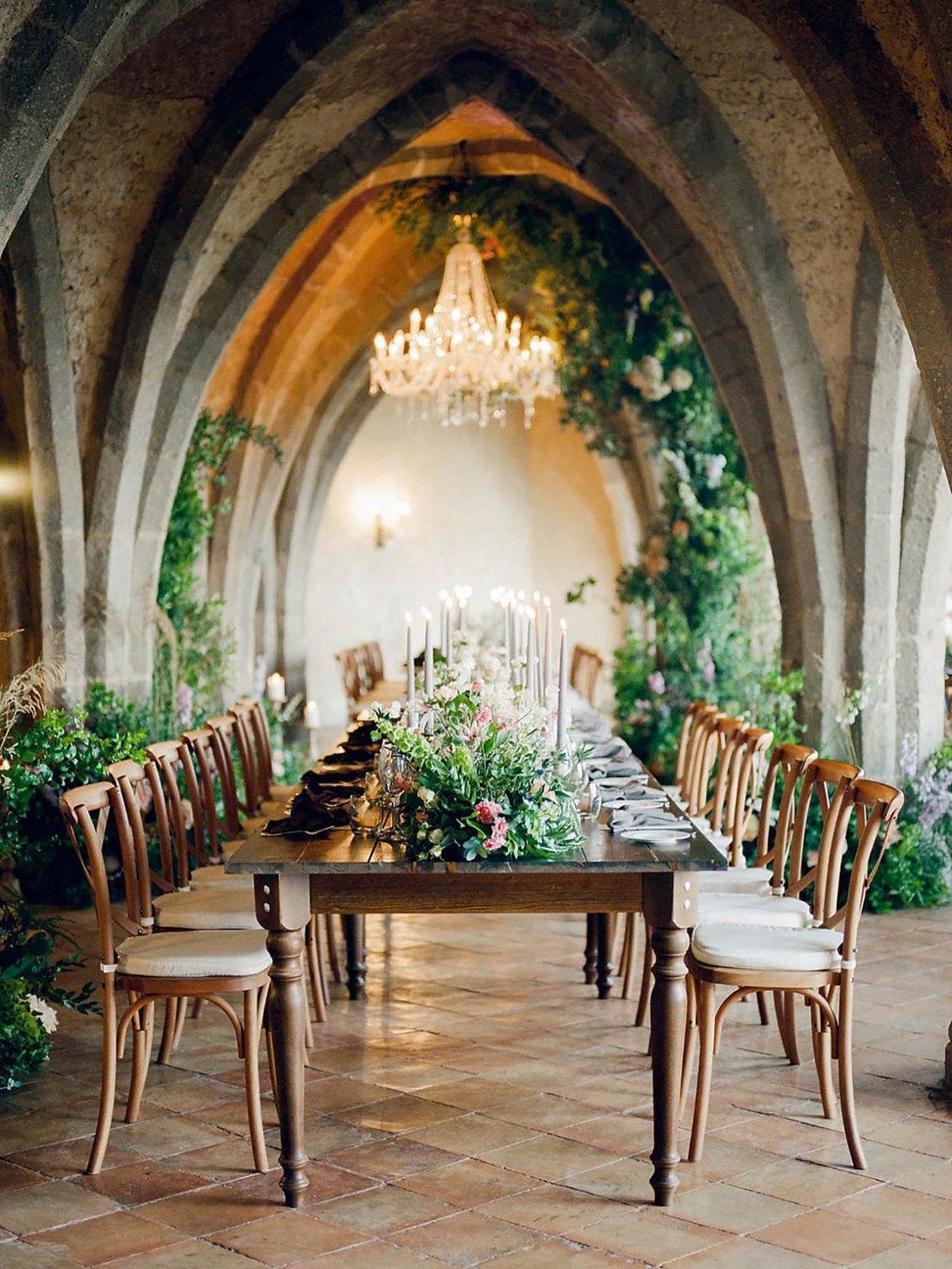
Villa Cimbrone
Villa Cimbrone is a hilltop villa and hotel in Ravello on the Amalfi Coast, where couples marry in Ravello's cathedral or on site, celebrate on the lawn and the Belvedere terrace, and sit down to dinner in a vaulted…

Palazzo Brancaccio
Palazzo Brancaccio is a palace built in 1880 in the centre of Rome, between the Colosseum and the basilicas of San Giovanni and Santa Maria Maggiore.
- Up to 240 guests

Dimora delle Balze
Dimora delle Balze is an estate dating from the 1800s on the Iblei plateau in south-east Sicily, between Noto and Syracuse.
- Up to 250 guests
- 11 rooms
Quick answers
Can foreigners legally get married in Italy?
Yes. Italy permits legally binding civil ceremonies for foreign couples through the local comune, with documents arranged via your home authorities and your consulate in Italy. A planner typically manages the process.
What documents do you need to marry in Italy?
Typically valid passports, birth certificates, a declaration of no impediment (nulla osta) via your consulate, or a multilingual certificate of capacity for many EU citizens, and any divorce/death certificates. The exact list varies by comune and nationality.
How long does it take to arrange a legal wedding in Italy?
The timeline is set by how long it takes to gather your documents and obtain the nulla osta (valid for six months), so start as soon as you have a date. A symbolic ceremony in Italy has minimal Italian paperwork, with the timeline set by your home country.
Is a symbolic ceremony in Italy legally valid?
No. A symbolic ceremony has no legal force; you complete the legally binding marriage at home before or after. It offers total freedom over place, words and timing.