


Yes, and the UK is foreigner-friendly. England and Wales need 7 days' local residence before giving notice, then a 28-day wait, at a register office or licensed venue. Scotland drops the residency rule entirely and allows ceremonies almost anywhere with an authorised celebrant. Many couples still choose a symbolic ceremony and marry legally at home.
The United Kingdom is one of the more genuinely accommodating countries in this guide when it comes to marrying legally as a foreigner — the question is less whether you can, and more which of its legal systems, and which route within it, suits your trip. England and Wales run on notice periods and licensed venues; Scotland drops the residency requirement altogether and lets you marry almost anywhere with the right celebrant; Northern Ireland has no residency period and runs on a 28-day notice. Alongside all three, a symbolic ceremony with the legal marriage done at home remains a common and straightforward choice.
Civil vs symbolic: which do you need?
A civil ceremony is legally binding on UK soil, whichever nation you marry in, and — unlike Italy, Spain or France — is a realistic option for most foreign couples, not only residents. A symbolic ceremony has no legal force but total freedom over words, setting and timing; you complete the legally binding marriage at home before or after. Choose civil if you want the marriage itself to take place in the UK and can plan your trip around the notice period; choose symbolic if your venue is not licensed for ceremonies, your visit is too short to satisfy the rules, or you simply want a fully personalised, unscripted moment.
| Civil (legal in the UK) | Symbolic (legal at home) | |
|---|---|---|
| Legally binding | Yes | No (you marry at home) |
| Where | Register office / approved venue (Eng & Wales); almost anywhere in Scotland | Anywhere |
| Paperwork | Notice + residence rule (Eng & Wales); notice only in Scotland | Minimal in the UK |
| Lead time | Weeks — plan the visit around it | Driven by your home country |
| Best for | A legally married UK wedding | Total freedom of place & script |
England and Wales: notice, residence and approved venues
To marry legally in England or Wales, both of you must give notice in person at a register office in the district where you have been resident for at least 7 days beforehand, then wait at least 28 days before the ceremony can take place (longer, up to 70 days, if either of you is subject to extra immigration scrutiny). Notice names the venue, a register office or a venue holding an 'approved premises' licence, and the ceremony must take place there within 12 months; change the venue and you give notice again. Northern Ireland sets no residency period: you send notice, in person or by post, to the registrar of the council district where you will marry, at least 28 days ahead, ideally eight weeks, or ten if either of you has been married before. If you are not British or Irish and do not have settled or pre-settled status, you will usually need a Marriage Visitor visa (valid for up to six months) to give notice and marry in the UK, so sort the visa question before booking travel.
Scotland: marry almost anywhere, with no residency rule
Scotland is the more flexible of the UK's legal systems for destination couples. There is no residency requirement at all, and you do not need to be in Scotland during the notice period — only for the wedding itself. You still give notice (the M10 Marriage Notice Form, plus a Declaration of Status if either of you is not a UK national, and a certificate of no impediment if you have lived in the UK for less than two years), at least 29 days and no more than 3 months ahead (Edinburgh asks for six to eight weeks, or three months if either of you is subject to immigration control), and the ceremony can then be civil, religious or 'belief' — including humanist celebrants — held virtually anywhere an authorised celebrant is willing to officiate: a castle, a hillside, a marquee, a garden. This is why Scotland is often the pragmatic choice for couples who want a fully legal, fully personalised ceremony without England and Wales's residence rule.
Where it works beautifully
From a museum quarter on the Thames to a turreted Herefordshire castle and a private Perthshire retreat near Gleneagles, the UK's range suits both routes:
Marry across the UK
A riverside museum estate in Greenwich, a turreted castle in Herefordshire and an exclusive-use retreat in the Perthshire hills.
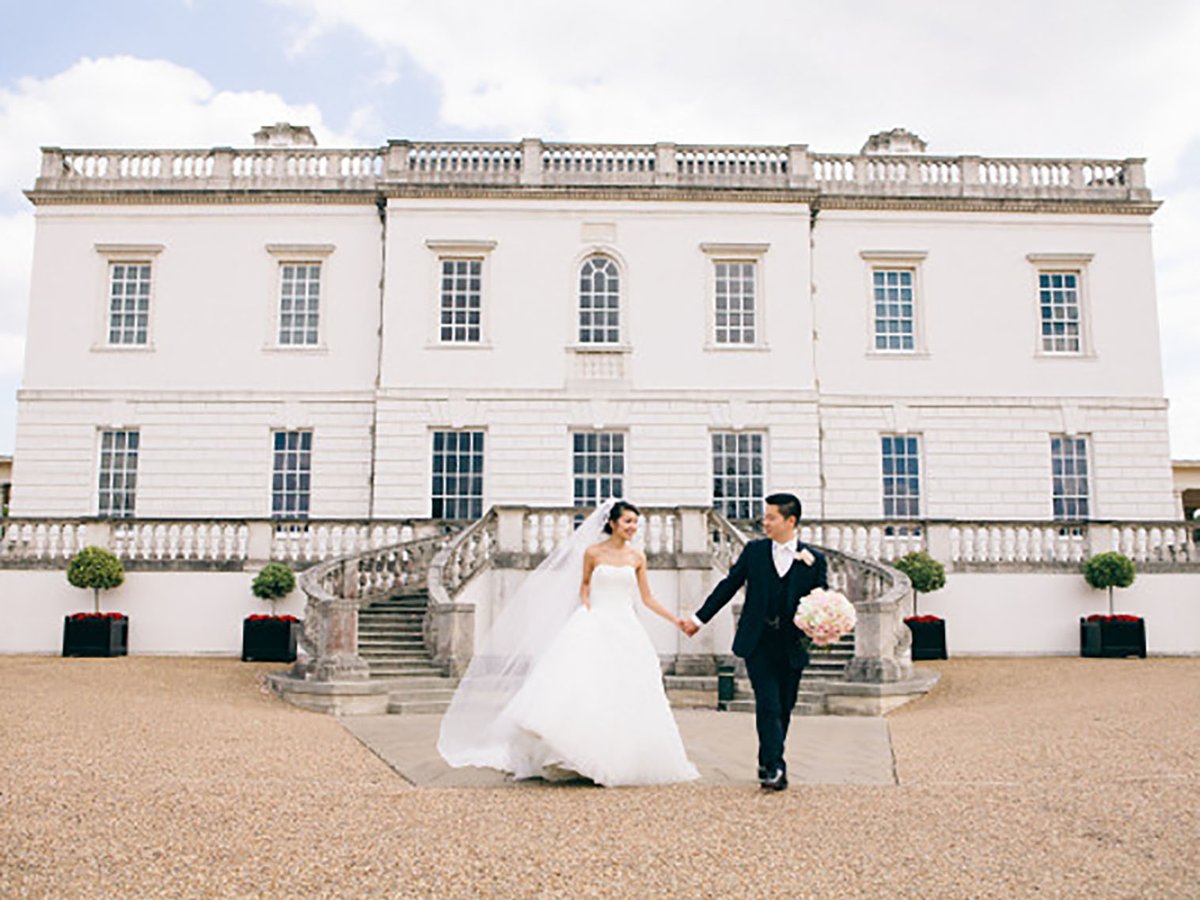
Royal Museums Greenwich
Royal Museums Greenwich brings together the Queen's House, the National Maritime Museum, the Royal Observatory and Cutty Sark within the Maritime Greenwich World Heritage Site.
- Up to 550 guests
- 40 rooms
- May–Oct

Hampton Court Castle
Hampton Castle is a medieval castle in the Herefordshire countryside, given over entirely to private weddings.
- Up to 120 guests
- Sleeps 54

Alexander House Scotland
Alexander House is a country house on a hillside above Strathallan in the Perthshire Hills, two and a half miles from Gleneagles.
Quick answers
Can foreigners legally get married in the UK?
Yes. England, Wales, Scotland and Northern Ireland all allow foreign nationals to marry legally, though the process differs by nation: England and Wales require a short period of local residence before giving notice, Scotland has no residency requirement at all, and many non-UK nationals need a Marriage Visitor visa.
What is the difference between marrying in Scotland and in England or Wales?
Scotland has no residency requirement and lets an authorised celebrant marry you almost anywhere — indoors, outdoors, in a castle or a marquee. England and Wales require 7 days' local residence before giving notice and a ceremony at a register office or a specifically licensed 'approved premises' venue.
How much notice do you need to give, and do you need a visa?
Notice must be given at least 29 days before the wedding in England and Wales, at least 28 days in Northern Ireland, and at least 29 days (and no more than 3 months) ahead in Scotland, where Edinburgh asks for six to eight weeks, or three months if either of you is subject to immigration control. If you are not British or Irish and do not have settled or pre-settled status, you will usually need a Marriage Visitor visa to give notice and marry in the UK.
Can you have a legally binding outdoor wedding in the UK?
In Scotland, yes — an authorised celebrant can marry you outdoors almost anywhere, subject to their agreement. In England and Wales, a legally binding ceremony must take place at a register office or a venue holding an 'approved premises' licence, which can include some outdoor spaces within a licensed site.
Is a symbolic ceremony in the UK legally valid?
No. A symbolic ceremony carries no legal weight; you complete the legally binding marriage separately, either at home or through one of the UK's civil routes. It gives you complete freedom over the venue, words and timing of the celebration itself.