


Switzerland allows foreigners to marry legally, with no minimum residence period, unlike Spain or France. But non-Swiss partners must be lawfully in Switzerland during the procedure and may need a visa, and the civil ceremony must take place in a wedding room approved by the canton, usually at the registry office, though some cantons also approve castles and historic houses, after a preparatory procedure (documents, in-person declarations, several weeks to a few months). Many couples do this quietly, then hold their real ceremony, symbolic or a blessing, at the venue.
Switzerland has one of the clearest legal systems in Europe for marriage, and one of the strictest about how the legal act itself must happen. A civil ceremony before a civil registrar is the only form of marriage the Swiss state recognises — a religious or outdoor ceremony carries no legal weight on its own. The good news for destination couples is that, unlike Spain or France, Switzerland sets no minimum residence period: a genuinely legal Swiss wedding is open to foreigners, though the non-Swiss partner must be lawfully in the country during the procedure and may need a visa. The catch is that it must take place in a wedding room the canton has approved, usually at the registry office, though cantons such as Vaud also approve castles and estates, after a formal preparatory procedure — which is why so many couples marry there legally and hold their real celebration, symbolic or blessed, at the venue itself.
Civil marriage: the only legally binding form
Every legally binding marriage in Switzerland goes through the Zivilstandsamt (German-speaking cantons), the Office de l'état civil (French-speaking) or the Ufficio dello stato civile (Italian-speaking) — the local civil registry office. Before a ceremony can be booked, couples must complete the mandatory preparatory procedure (Ehevorbereitungsverfahren): both partners declare in person that they are free to marry, either at the Swiss registry office where the wedding will take place or, if you live abroad, through your nearest Swiss embassy or consulate. Processing takes anywhere from several weeks to a few months, depending on how quickly foreign documents are legalised, and the resulting marriage authorisation is then valid for three months.
The documents you will need
Expect to provide valid passports, birth certificates and a certificate confirming you are free to marry (sometimes called a certificate of no impediment or civil-status certificate), plus divorce or death certificates where a previous marriage applies. Civil-status documents generally need to be less than six months old, and foreign paperwork usually has to be legalised or apostilled and officially translated into the canton's language — German, French or Italian. The exact list and process vary slightly by canton and are set by the registry office or Swiss representation handling your case.
| Civil (legal in Switzerland) | Symbolic (legal at home) | |
|---|---|---|
| Legally binding | Yes | No (you marry at home) |
| Where | Registry office or canton-approved wedding room | Anywhere, including outdoors |
| Residency required | No minimum period, but lawful stay needed | No |
| Paperwork | Preparatory procedure, apostilled & translated documents | Minimal in Switzerland |
| Best for | A legal Swiss ceremony | Total freedom of place |
Why couples combine both
Because the civil ceremony must take place in an approved wedding room, it rarely doubles as the moment couples have actually pictured — lakeside at Montreux, alpine at St. Moritz or Gstaad, or on the lake at Lugano. Two routes are common. Some complete the legal marriage quietly at home in the weeks before travelling, then hold an entirely symbolic ceremony at the Swiss venue. Others lodge the paperwork well ahead and fit a short legal ceremony at the local registry office into the trip itself, then treat the venue ceremony as a blessing — no less real for being legally symbolic. Both are completely valid weddings; the difference is only where the legal act takes place.
Where it works beautifully
From Lake Geneva's belle-époque palaces to the alpine glamour of Gstaad and St. Moritz and the lakeside calm of Lugano, Switzerland's grand hotels are built for a blessing or symbolic ceremony with real weight:
Marry across Switzerland
A Lake Geneva belle-époque palace, a Gstaad grand hotel, a St. Moritz alpine icon and a Lugano lakeside hotel.

Fairmont Le Montreux Palace
Fairmont Le Montreux Palace is a Belle Époque hotel, established in 1906 on the Swiss Riviera, with 236 five-star rooms and suites, a 2,000 sqm spa and views across Lake Geneva to the Alps.
- Up to 690 guests
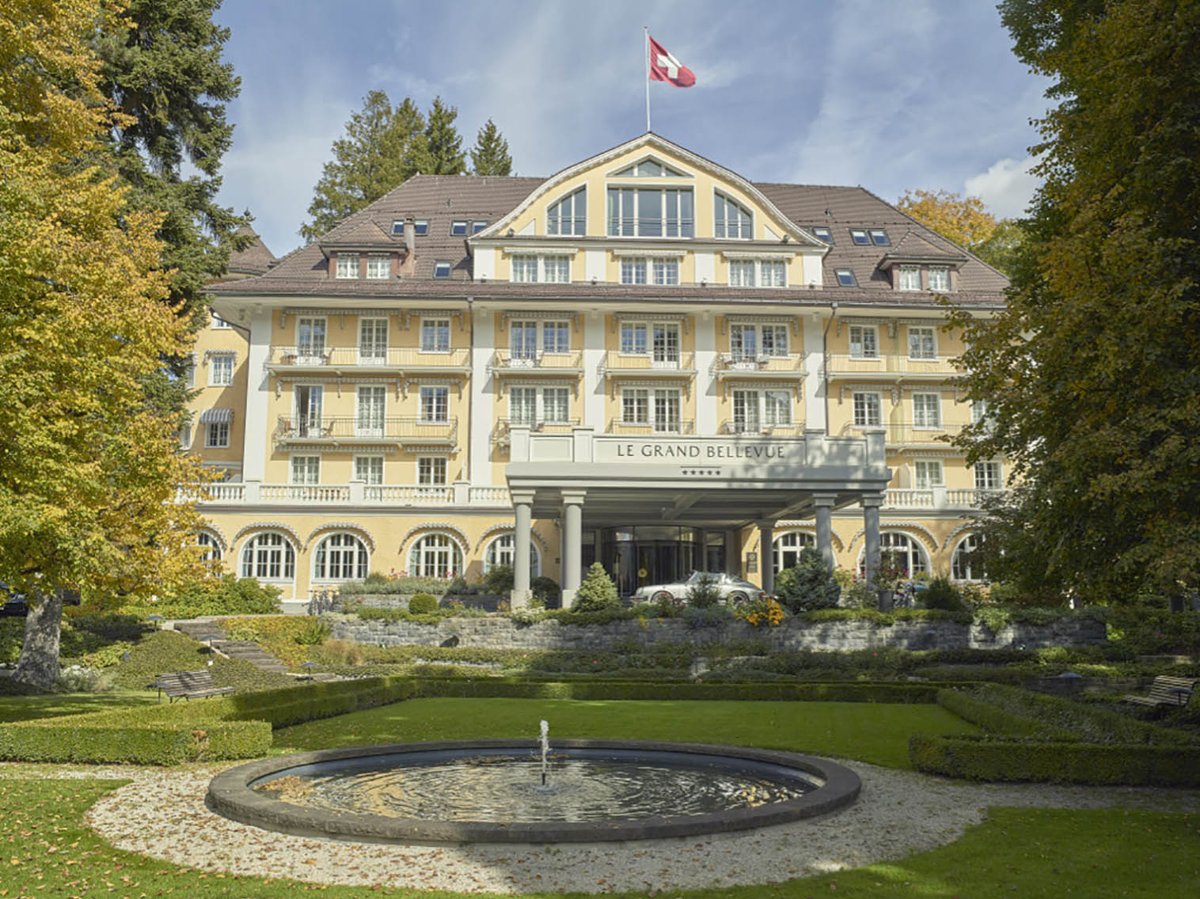
Le Grand Bellevue
Le Grand Bellevue is a Belle Époque five-star hotel in Gstaad, open since 1912 and a member of Swiss Deluxe Hotels, offering wedding and event packages for up to 114 guests when the whole house is privatised.
- Up to 114 guests

Badrutt's Palace Hotel
Badrutt's Palace Hotel stands on Via Serlas in St. Moritz and hosts weddings in the Embassy Ballroom, which seats about 290 for dinner, with civil ceremonies held in the smaller Madonna Room.
- Up to 290 guests

Hotel Splendide Royal Lugano
Hotel Splendide Royal is a Belle Époque hotel on the shore of Lake Lugano, with 93 rooms and event halls that include the Panorama room, seating 210 for dinner, and terraces overlooking the lake.
- Up to 210 guests
Quick answers
Can foreigners legally get married in Switzerland?
Yes. Unlike Spain or France, Switzerland has no minimum residence period for marriage, though the non-Swiss partner must be lawfully in Switzerland during the procedure, must attend in person and may need a visa. You must complete the mandatory preparatory procedure through a Swiss civil registry office, or a Swiss embassy or consulate if you live abroad, with both partners declaring in person before a civil ceremony can be held.
What documents do you need to marry in Switzerland?
Typically valid passports, birth certificates and a certificate confirming you are free to marry, plus divorce or death certificates where relevant — generally issued within the last six months, then legalised or apostilled and translated into the canton's official language (German, French or Italian).
How long does it take to arrange a legal Swiss wedding?
Allow a few months in total. The preparatory procedure itself takes several weeks to a few months, depending on how quickly foreign documents are legalised, and the resulting marriage authorisation is only valid for three months, so timing needs care.
Can you have a legally binding ceremony outdoors, lakeside or in the mountains?
No. Swiss law requires the civil ceremony to take place in a wedding room approved by the canton: usually at the registry office, though some cantons, such as Vaud, also approve castles and historic estates. An open lakeside or mountain spot is not one of them. That is why couples who want an outdoor or venue setting typically add a separate symbolic or blessing ceremony there.
Is a symbolic ceremony in Switzerland legally valid?
No, it carries no legal weight on its own. Couples either complete the legal marriage at home, or hold a short civil ceremony at a Swiss registry office, and treat the venue ceremony as symbolic or a blessing.